
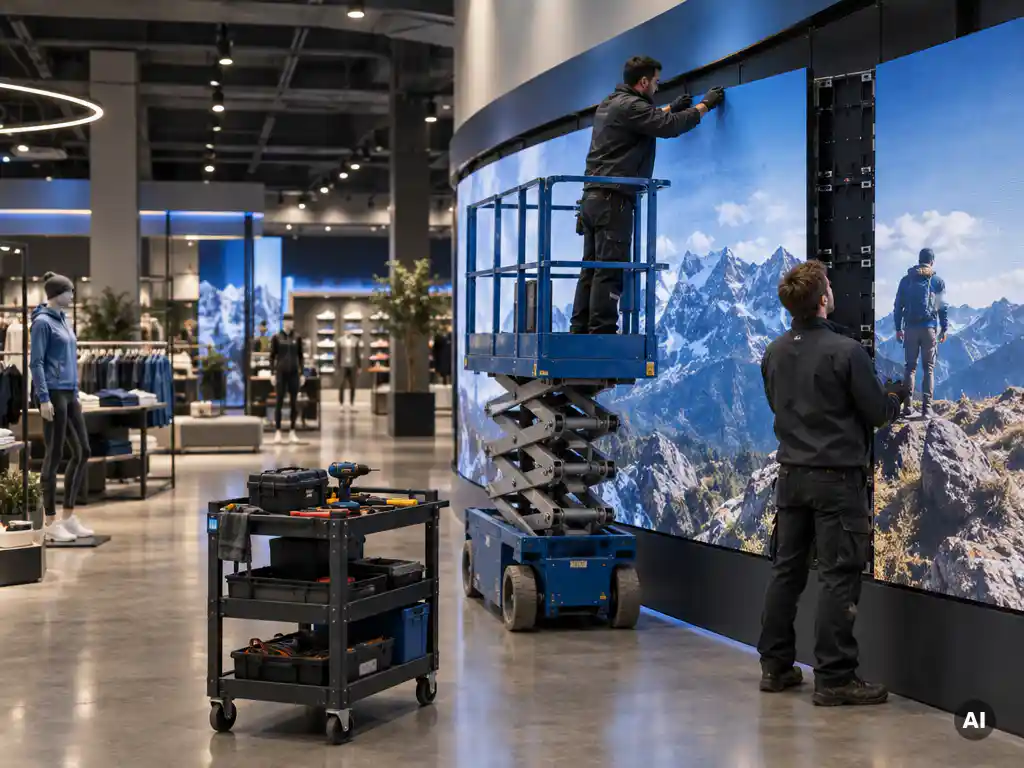
Large retail stores typically use specialist digital signage integrators or LED display installers, not generalist AV contractors or store maintenance teams. These specialists handle screen engineering, mounting, power, networking, and content system setup as one coordinated project. For retail chains, the best installers can also deliver consistent results across many locations.
The right choice depends on screen type, store architecture, and rollout scale. The sections below cover who to hire, what installation includes, how complex displays are handled, and what drives cost and timeline.
Should retailers use in-house teams or specialist installers?
Large retailers should generally use specialist installers for LED video wall installation because in-house facilities teams rarely have the structural, electrical, and calibration expertise these displays demand. In-house staff are better suited to day-to-day content updates and basic troubleshooting once the system is running.
The reasoning is practical. LED walls involve cabinet alignment, load-bearing mounts, power distribution, heat management, and pixel calibration. Mistakes show up as visible seams, uneven brightness, or downtime. A specialist has done this repeatedly, which lowers risk, especially when a flagship store carries brand visibility.
A hybrid model often works best. The specialist designs, installs, and commissions the system, while the retailer’s internal team owns content planning and first-line checks. Clear responsibilities, written down before the project starts, prevent gaps later.
What does a full-service digital signage installation include?
A full-service digital signage installation covers consultation, design, engineering, hardware supply, physical installation, content system setup, and ongoing maintenance under one partner. The goal is a working, supported screen environment, not just mounted hardware.
The typical scope runs in this order:
- Consultation and concept: defining objectives, viewing distances, and how screens support the customer journey.
- Design and technical engineering: choosing screen type, pixel pitch, and brightness, then integrating the display into the architecture or store furniture.
- Production and quality control: sourcing displays from established manufacturers and testing before shipment.
- Installation and commissioning: mounting, cabling, power, network setup, and calibration.
- Content management: configuring the CMS and, where needed, producing campaign visuals.
- Maintenance and support: software updates, hardware servicing, and fast fault response.
Content is often the overlooked item. A screen installed without a content plan or workflow tends to show outdated or off-brand material, which undermines the investment.
How do installers handle transparent, curved, and custom LED displays?
Installers handle transparent, curved, and custom LED displays through project-specific engineering: measuring the space precisely, selecting purpose-built modules, and designing custom frames or mounts. These formats rarely suit standard off-the-shelf installation, so planning happens well before any hardware arrives.
Transparent shopfront screens
Transparent LED screens mount on or behind glass and let daylight through while preserving product visibility. Installers must account for glass weight and strength, cable routing that stays discreet, and brightness levels that remain readable in sunlight. Window displays also need sufficient brightness for high-ambient-light conditions.
Curved and custom-shaped walls
Curved and non-rectangular installations use modular cabinets that follow the required radius or outline. Precise structural drawings, tight tolerances, and careful calibration keep the image continuous across the curve. Custom shapes, such as columns or branded forms, add fabrication steps, so teams typically mock up dimensions and content layouts early to avoid on-site surprises.
How are screens rolled out across multiple store locations?
Screens are rolled out across multiple stores through a standardized specification, a phased installation schedule, and centralized content management. The installer defines one approved hardware and software setup, then repeats it store by store with local technical support, so every location looks and performs consistently.
A practical multi-store digital signage rollout usually includes:
- A pilot store to validate hardware, content, and workflows before scaling.
- A standard kit and installation guide so each site follows the same method.
- Coordinated logistics for shipping, scheduling, and local installation crews.
- A central CMS that deploys campaigns to all or selected stores at once.
- Remote monitoring and local engineers for fast issue resolution.
Store layouts differ, so the standard must be flexible enough to adapt to each space without breaking brand consistency. Early site surveys catch power, network, and structural constraints that would otherwise delay individual openings.
What should retailers ask before hiring a screen installer?
Before hiring a screen installer, retailers should ask about relevant retail experience, international delivery capability, in-house engineering, content management support, and after-sales service levels. The answers reveal whether the partner can manage a complex project from concept to long-term operation or only supply and mount hardware.
Useful questions include:
- Which comparable retail projects have you delivered, and in which countries?
- Do you handle design, engineering, installation, and maintenance yourselves?
- How do you manage multi-country rollouts and local technical support?
- Which CMS options do you offer, and who creates or adapts content?
- What are your response times and support hours after launch?
- How do you test and quality-check displays before installation?
Ask to see reference projects and speak with decision-makers on the installer’s team. Short communication lines and proactive problem-solving matter in practice, particularly when deadlines are tight.
What affects the cost and timeline of retail screen installation?
Cost and timeline depend mainly on screen size, pixel pitch, display type, structural complexity, content needs, and the number of locations. Custom or transparent displays and tight store-opening deadlines typically increase both budget and lead time compared with standard flat-panel installations.
Key factors to plan for:
- Display specification: finer pixel pitch and higher brightness raise hardware cost.
- Customization: curved, transparent, or custom-shaped screens require engineering and fabrication time.
- Site conditions: power capacity, network readiness, and structural support can add preparation work.
- Content production: creating motion visuals for the screen takes time and should start early.
- Rollout scale: more stores mean more logistics, scheduling, and local coordination.
- Support model: maintenance and monitoring agreements add ongoing costs but protect uptime.
Build the schedule backwards from the opening or campaign date, and allow a buffer for production and shipping. Exact figures vary by project, so request itemized quotes based on a site survey rather than relying on general estimates.
How THE LEDWALL helps with retail screen installation
THE LEDWALL is an international, full-service LED integration partner based in Eindhoven, working with retail brands that need screens designed, installed, and supported across many stores. Reference projects include Nike, Foot Locker, PUMA, Decathlon, lululemon, Karl Lagerfeld, and American Eagle, which you can explore in the project portfolio.
What this looks like in practice:
- Consultation and design: concepts shaped around your brand, store architecture, and commercial goals.
- Engineering and production: indoor and outdoor LED walls, M2 LED screens, and TV screens from leading manufacturers, with strict quality checks.
- Custom formats: transparent shopfront, curved, and custom-shaped installations integrated into the retail environment.
- Content creation and CMS: campaign visuals plus central software to manage screens across all locations.
- International rollout: coordinated installations supported by local engineers.
- Ongoing support: 24/7 technical assistance for hardware and software.
Planning a flagship or multi-store screen project? Contact our team to discuss your requirements and next steps.


